How a (Truly) Marine Screw Compressor Works
Success happens by design.




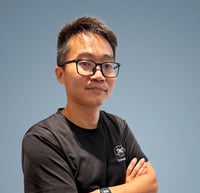
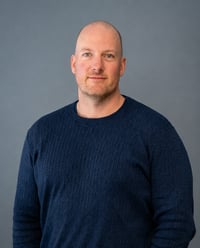
At TMC, service is not a function. It is how we operate every day, across regions, vessels and lifecycles. Johan Laake, TMC´s Global Manager Technical Support and Service, and Joseph Lau, service engineer based in Singapore, describe what that means in practice. From different roles, they represent the same approach: being present where it matters, close to the vessels, the crew, and the conditions that define performance.
Much of TMC's service work happens remotely. Cases are handled by email and phone, engineers troubleshoot across time zones, and many issues are resolved without anyone setting foot on a vessel. That capability is central to how the team operates.
 But some insight can only be gained in person. On vessels, in ports, and side-by-side with crew, information becomes more precise, and decisions can be made on a stronger basis.
Joseph Lau has seen this difference play out repeatedly across the region.
"By email, issues are often distorted. You get a description, but not the full picture. When you are physically there, you see what is actually happening — the installation, the environment, and how the crew interacts with the equipment. That changes how you approach the problem,” says Lau.
Without that direct insight, small deviations can go unnoticed. Installations may look correct on paper but behave differently in operation. In newer markets, where experience with the equipment may vary, the gap between specification and reality can be significant. Being present closes that gap.
 Response within the hour, and then we move
Insight is only valuable if it leads to action, and action has to be fast. When a customer reaches out, the response is immediate. Warranty cases are typically acknowledged within an hour and a half. Service requests are responded to within the same working day. For Johan Laake, this is not a target. It is a baseline.
“When a customer contacts us, they will immediately know that someone is on it and that action is already being taken," says Laake.
From there, the team moves directly into problem-solving, whether through remote support or on site. Responsiveness, Laake argues, is not separate from the product delivered. It is part of it.
The ability to respond quickly is built into how the organisation operates globally. From Korea, China and Singapore to emerging markets such as Senegal, Brazil and Guyana the setup combines internal teams and trusted service partners, ensuring that support is always within easy reach.
"We have made conscious decisions about where to be present. It is not just about covering the major hubs. It is about being close to where our customers actually operate, including markets that are growing fast and where the need for reliable support is significant," says Laake. "If you are not there, you cannot really claim to support them."
Much of the work happens before anything goes wrong. During commissioning and installation, engineers verify that equipment is installed and operating according to specification. Space constraints, temperature conditions and system integration are assessed in detail, to prevent issues later in the vessel´s lifecycle. Joseph Lau sees this phase as one of the most important parts of the job.
"Commissioning is where you set the foundation. If something is not right at that stage, even something small, it will show up later, often at the worst possible time. So, we go through everything carefully. Not because we expect problems, but because we know the cost of missing something early," he says.
Once equipment is in operation, the same approach continues. Service is not only about fixing issues. It is about helping customers avoid them, and making sure crews have the knowledge to do so.
"When we are on site, we never just fix the issue and leave. We walk the crew through what happened, why it happened, and what to look for going forward," says Lau. "That transfer of knowledge is as important as the repair itself. It reduces risk, and it builds confidence in the people who work with the equipment every day."
Being present over time builds something less tangible, but equally important: trust. When relationships are established, the threshold for reaching out becomes lower. Customers reach out earlier. Problems are addressed before they escalate. For Johan Laake, this shift in behaviour is one of the clearest signs that the service model is working.
There is a real difference between a customer who contacts us at the first sign of an issue and one who waits several weeks before reaching out," says Laake. "The earlier we get involved, the more options we have. Problems can be resolved faster, downtime can be reduced, and in some cases we can prevent a minor issue from developing into something more serious. That early contact benefits everyone."
Support is reinforced through dedicated service channels and 24/7 availability, making it as easy as possible to reach the right person at the right time.
Behind TMC`s global service setup is a team with deep, hands-on maritime experience. TMC`s service engineers have worked with marine compressor systems across vessel types, regions and operating conditions for decades. Because TMC focuses exclusively on marine and offshore compressors, customers meet specialist who understand both the equipment and the realities of operating at sea.
Internally, the organizations is built around fast collaboratíon and direct access to expertise. "We have a flat structure, which means that if I am working on something and I need input, I can reach the right person immediately," Laake explains.
"There is no hierarchy to navigate. Theres is just the problem, and the people who know how to solve it. That shared mindset of finding solutions quickly is something you feel across the whole organisation."
Customers experience TMC locally, through people who know the region, the vessels and the operating conditions. But behind every interaction is a global system, built on presence, responsiveness and experience across regions.
"You have to be there to understand. Not just once, but consistently. That is how you build the kind of knowledge that actually makes a difference when something goes wrong," says Lau.
Laake's conclusion is equally direct: "And once you understand, you act. That is what we are here for."